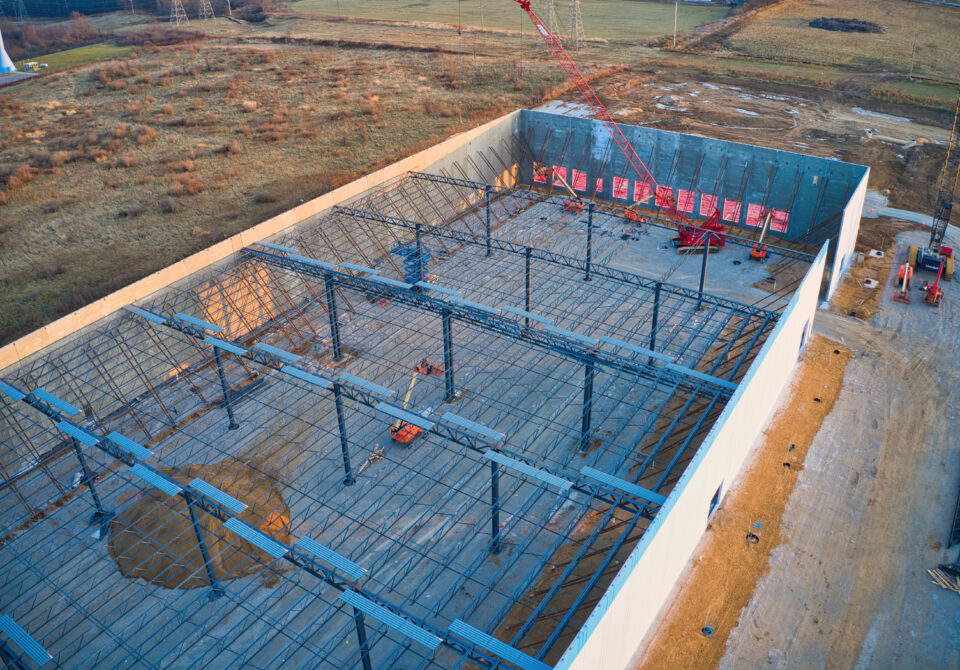
At some point, every growing food and beverage manufacturer faces the same question: “How do we add production capacity in a way that supports both our immediate demand and long-term growth?”
For some, retrofitting an existing facility offers a faster path to production.
For others, pursuing a greenfield development can provide the flexibility and scalability needed to support long-term operational goals.
But the decision is rarely straightforward. Different approaches can lead to a range of outcomes, from operational constraints and unforeseen costs to increased speed to market and stronger long-term positioning.
The most successful outcomes begin by evaluating how the facility aligns with your business case, production requirements and long-term strategy.
Here are five key considerations to help guide your decision on what approach will work best for your next facility.
1. Start with Your Business Case…Not the Building
One of the most common patterns we see is a manufacturer evaluating facility options before fully validating the business case.
Before deciding whether to retrofit or build a new facility, evaluate your production requirements, product mix, supply chain logistics, labor availability and long-term growth projections.
At this stage, it’s important to distinguish between upgrading or expanding an existing facility, renovating a vacant building, or building a new greenfield building. Each presents different constraints, timelines and levels of disruption.
Enterprise master planning can play a critical role in this process. When facility decisions are evaluated in the context of your broader production network, it becomes easier to identify where existing assets can continue to serve your business and where new capacity may be needed to support long-term growth.
2. When Speed to Market Is Critical, a Retrofit Can Help You Move Faster
Retrofitting an existing facility can significantly reduce timelines compared to greenfield development, which requires site selection, permitting, infrastructure coordination and construction from the ground up.
This is especially true when retrofitting a vacant or lightly used building, where fewer constraints allow for faster design and construction.
Retrofitting is often used when you need to:
- Launch new products quickly
- Scale pilot operations
- Enter new markets
- Capture market share while demand is strong
💡 Food for thought: Use retrofits strategically to begin production faster, then transition to a greenfield facility once long-term demand and production needs are fully validated.
3. Existing Facilities Can Provide Operational Continuity, but May Also Introduce Constraints
When retrofitting an existing, operational facility, manufacturers gain continuity. Existing facilities may already offer:
- Established operational processes
- Proven supply chains and logistics
- Experienced facility staff and leadership in place
This continuity can reduce disruption and accelerate ramp-ups. For example, existing facilities may have trained maintenance teams on site, known production capabilities, and teams who are familiar with similar equipment or product lines, all of which can support smoother transitions and future improvements.
In many cases, the advantage lies less in the building itself and more in the existing operations. Existing teams may already understand the equipment, production expectations and day-to-day processes required to keep operations running.
But food and beverage production often requires specialized infrastructure, including equipment foundations, drainage systems, sanitary design and precise temperature and pressure control. Meeting these requirements can require significant infrastructure modifications.
And when production requirements exceed what the existing structure was designed to support, those limitations can impact your long-term performance, flexibility and future growth. Careful evaluation is required to ensure a retrofit effectively supports operational performance and long-term strategy.
💡 Food for thought: In the right scenario, retrofitting can allow manufacturers to build on what’s already working while identifying opportunities to improve food safety, production flow and future scalability.
4. Greenfield Facilities Provide Greater Control, Scalability and Long-Term Efficiency
If your organization is expecting sustained growth, greenfield development enables you to design facilities specifically to meet your production requirements.
Unlike retrofit scenarios, greenfield development minimizes existing constraints and allows for greater design flexibility.
This allows manufacturers to optimize:
- Equipment layout and production flow
- Operational efficiency
- HACCP planning optimization and food safety design
- Structural requirements for specific production needs
- Long-term growth and scalability
Greenfield facilities can also better accommodate specific needs, including extreme temperature zones and customized processing environments. This approach provides greater long-term flexibility, but requires longer timelines due to permitting, infrastructure development and construction, and additional capital investment.
For companies with long-term growth strategies, this investment can support greater efficiency and scalability over time.
💡 Food for thought: Building from the ground up can create more opportunities to intentionally design for sanitation flows, hazard control, environmental separation and long-term food safety performance.
5. The Biggest Risk Isn’t Retrofit or Greenfield…It’s Deciding Without the Full Picture
Facility growth decisions carry significant financial and operational risk.
Retrofit projects may initially appear more cost-effective, but hidden structural limitations or building constraints can increase costs and impact long-term performance. On the other hand, greenfield projects offer greater flexibility but require larger upfront investment and longer timelines.
Understanding the full picture (including development costs, operational impacts and long-term scalability) is essential to making the most informed facility decision for your long-term growth goals.
Early planning and due diligence with a trusted partner help you identify risks, validate assumptions and ensure facility investments align with your production needs and business goals.
How Strategic Planning Helps You Make More Confident Facility Decisions
The most successful facility decisions begin with a clear understanding of your business case, operational needs and long-term growth plans. Whether you’re adapting to a vacant building, updating an existing facility or building new, each path carries distinct trade-offs that require thoughtful evaluation.
With a strategic approach to planning—and the right partner asking the right questions early—you can make more confident decisions and position your operations for sustained growth.
The Team Behind the Perspective
This article reflects the collective expertise of our team specializing in food and beverage facility strategy, design and construction. Drawing from active projects and client partnerships across the country, these insights are grounded in real-world experience evaluating retrofit, expansion and greenfield development approaches to support both immediate production needs and long-term growth.